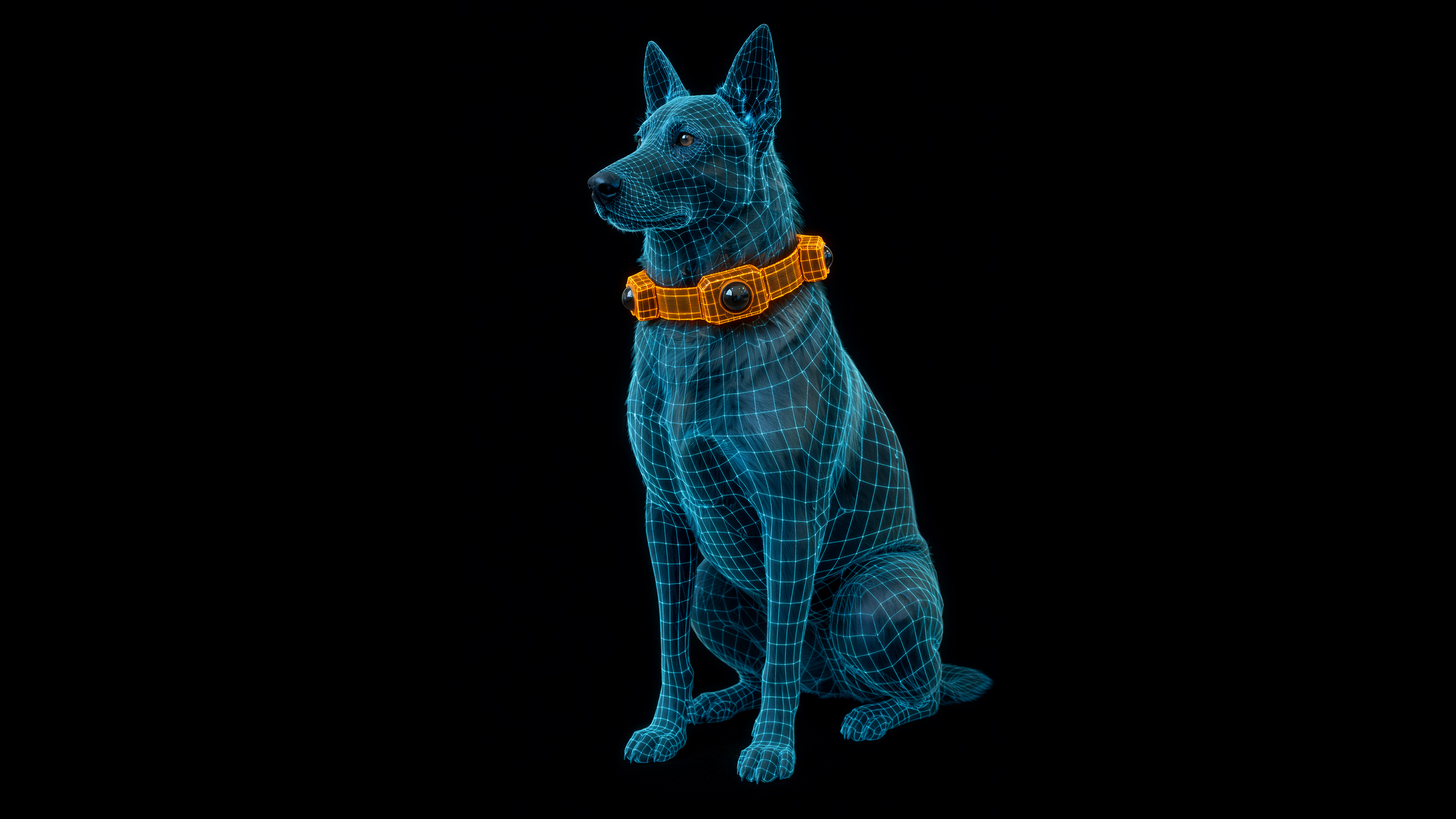
How AI Is Learning to Read Your Dog's Body Language
Dogs communicate constantly through posture, movement, and behavior patterns. Here's how machine learning is finally catching up.
Every dog owner has been there. Your dog does something — a specific tilt of the head, a particular way of standing at the door, a subtle change in energy — and you just know what it means. Years of living together have taught you to read signals that are invisible to everyone else.
But what if technology could learn to read those signals too?
The Language Dogs Speak
Canine behaviorists have spent decades cataloging the ways dogs communicate. A play bow means “let’s go.” Whale eye (showing the whites of the eyes) signals stress. A slow tail wag is very different from a fast one. Yawning doesn’t always mean tired — sometimes it means anxious.
The challenge has always been scale. A trained behaviorist can observe one dog at a time. They can’t watch your dog 24/7 and flag every meaningful signal.
Training AI to See What We Miss
K9Link’s on-device AI uses computer vision models trained on thousands of hours of annotated dog behavior footage. The four cameras on the collar provide 360-degree coverage, giving the AI a complete view of your dog’s posture and movement at all times.
Here’s what the system currently recognizes:
- Play behavior — bows, zoomies, chase sequences, wrestling
- Stress indicators — lip licking, whale eye, tucked tail, pacing
- Alert posture — stiff body, forward ears, focused gaze
- Rest states — sleeping positions, napping vs. deep sleep
- Social interactions — greeting behavior, submission, dominance signals
How It Works in Practice
The AI doesn’t just identify isolated behaviors. It tracks patterns over time. If your dog typically does a play bow 15 times during a park visit but today only managed 3 before lying down, the system notes that change. Combined with health sensor data — heart rate, temperature, activity level — it can suggest whether your dog might be feeling under the weather.
From Observation to Insight
Raw behavior detection is useful, but the real value comes from context. K9Link’s AI correlates behavior data with:
- Time of day — Is your dog more anxious in the evenings? More active in the mornings?
- Location — Do they behave differently at the park versus at home?
- Social context — How do they respond to specific dogs or people?
- Health metrics — Are behavioral changes accompanied by physiological changes?
Over time, the system builds a behavioral profile unique to your dog. This isn’t a generic “dog behavior” model — it’s a model that understands your dog.
What This Means for Dog Owners
For most owners, this translates to peace of mind. You’ll catch health issues earlier, understand your dog’s emotional state better, and have concrete data to share with trainers or veterinarians.
For professional trainers and behaviorists, it’s a tool that extends their reach. Instead of relying on an owner’s description of “he’s been acting weird lately,” they can review actual behavioral data and make informed recommendations.
The Road Ahead
We’re still in the early days of canine AI. Current models are good at recognizing common behaviors, but the long tail of subtle, breed-specific, and individual behaviors is vast. Every K9Link collar that ships helps improve the model — with owner permission, anonymized behavioral data contributes to a growing dataset that makes the AI smarter for every dog.
The goal isn’t to replace the intuition you’ve built with your dog. It’s to augment it — to catch the things you miss when you’re at work, asleep, or just not paying attention.
Your dog is always talking. K9Link AI helps you listen.