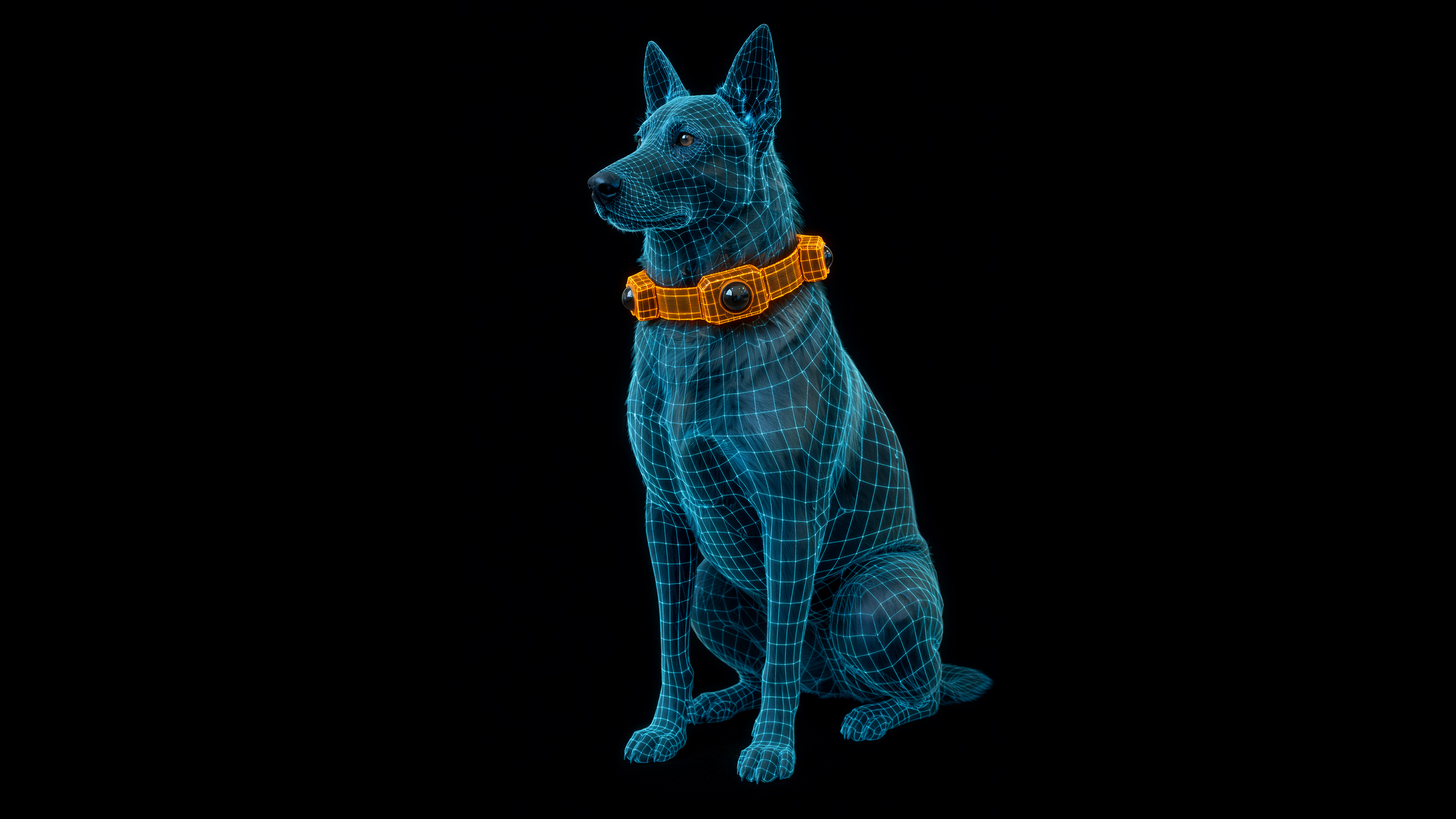
5 Health Metrics Every Dog Owner Should Track
Continuous health monitoring can catch problems before they become emergencies. These are the five numbers that matter most.
Most dog owners only think about their dog’s health during annual vet visits. But just like humans benefit from wearable fitness trackers, dogs benefit from continuous health monitoring — especially since they can’t tell us when something feels wrong.
Here are the five health metrics that provide the most insight into your dog’s wellbeing, and what changes in each one can tell you.
1. Resting Heart Rate
A dog’s resting heart rate varies by size. Small dogs typically range from 100 to 140 beats per minute, while large breeds sit between 60 and 100 BPM. What matters isn’t the absolute number — it’s the trend.
What to watch for:
- A gradual increase in resting heart rate over weeks can indicate early cardiac disease, pain, or chronic stress.
- A sudden spike might signal acute pain, fever, or anxiety.
- An unusually low heart rate in an active dog could indicate a conduction disorder.
K9Link continuously monitors heart rate through sensors on the collar, building a baseline specific to your dog. When the resting rate deviates by more than 10% from the 30-day average, you get an alert.
2. Respiratory Rate
Normal breathing for a resting dog is 15 to 30 breaths per minute. Respiratory rate is one of the most sensitive indicators of cardiovascular and pulmonary health.
What to watch for:
- Consistently elevated respiratory rate during rest can be an early sign of congestive heart failure — sometimes detectable weeks before clinical symptoms appear.
- Labored or irregular breathing patterns may indicate pain, respiratory infection, or allergic reaction.
- Changes in breathing during sleep are particularly meaningful since environmental factors are controlled.
This is one metric that’s nearly impossible to track manually. You’d have to count your dog’s breaths while they sleep. The collar does this automatically.
3. Activity Level and Patterns
Total daily activity matters, but the pattern matters more. A dog that’s normally active in bursts throughout the day but suddenly becomes lethargic, or a dog that’s restless at night when they usually sleep soundly — these pattern changes are significant.
What to watch for:
- A 20%+ drop in daily activity sustained over 3+ days warrants attention.
- Nighttime restlessness can indicate pain, cognitive dysfunction in older dogs, or environmental stressors.
- Changes in play intensity or duration may reflect joint pain or fatigue.
K9Link tracks activity with accelerometers and correlates it with time of day, creating a 24-hour activity profile. The AI learns what’s normal for your dog and flags meaningful deviations.
4. Temperature
A dog’s normal body temperature ranges from 101°F to 102.5°F (38.3°C to 39.2°C). Temperature is a vital sign that’s easy to overlook because traditional measurement requires a rectal thermometer — not exactly a casual check.
What to watch for:
- Temperatures above 103°F (39.4°C) indicate fever and potential infection.
- Temperatures above 106°F (41.1°C) are a medical emergency (heatstroke).
- A lower-than-normal temperature can indicate shock or hypothermia.
- Subtle temperature elevations over days may indicate a brewing infection before other symptoms appear.
The collar’s skin-contact temperature sensor provides continuous readings. It’s not as precise as a rectal thermometer, but it excels at detecting changes from baseline — which is what matters for early detection.
5. Sleep Quality
Dogs sleep 12 to 14 hours per day on average, with older dogs and puppies sleeping even more. But not all sleep is equal. Just like humans, dogs cycle through light sleep, deep sleep, and REM stages.
What to watch for:
- Reduced deep sleep or REM sleep can indicate pain or discomfort — dogs in pain often can’t settle into deeper sleep stages.
- Frequent waking may signal cognitive dysfunction syndrome in senior dogs.
- Changes in preferred sleeping position can indicate joint pain or breathing difficulties.
- Excessive sleep beyond the normal range may indicate hypothyroidism, depression, or illness.
K9Link uses a combination of accelerometer data and heart rate variability to classify sleep stages. Over time, the AI builds a sleep profile and alerts you to meaningful changes.
The Power of Combined Data
Any single metric in isolation tells a limited story. The real value comes from looking at all five together. A dog with a slightly elevated heart rate, reduced activity, and fragmented sleep might be in the early stages of an illness — even if each metric alone wouldn’t trigger concern.
This is where AI shines. K9Link’s on-device models analyze all health streams simultaneously, looking for correlations that would be impossible to spot manually. The result is health reports that give your veterinarian actionable data, not just numbers.
Start Tracking Early
The best time to start monitoring your dog’s health metrics is when they’re healthy. A strong baseline makes it dramatically easier to detect when something changes. Whether your dog is a puppy or a senior, continuous monitoring provides peace of mind and the potential for earlier intervention.
K9Link AI makes all five metrics automatic. Learn more about our health monitoring features.